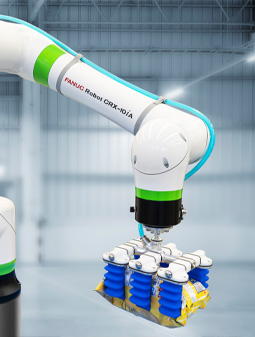
Fulfillment teams are under constant pressure to ship faster, hit tighter cutoffs, and do it with fewer manual touches. That’s why Piece Picking is moving from labor-heavy stations to connected automation lanes built around a robotic piece picking system. Done right, this isn’t a “robot demo” on the corner of the floor it’s a dependable pick-to-pack engine that runs all day, keeps accuracy high, and scales as volume grows.
What a robotic piece picking lane looks like in practice
A modern cell starts with ai vision picking. Depth cameras and trained models identify the next SKU inside a tote, estimate pose, and select a safe grasp. The arm—often described simply as a pick and place robot—then moves the item to the next step with repeatable precision. In high-volume operations, that handoff goes directly to packaging. Add robotic bagging and you unlock direct-to-bag fulfillment: pick → drop → seal → label → sortation. Many teams refer to this setup as autobagging, because it removes the stop-start cycle of manual bagging and labeling.
Why automation needs to handle “random” reality
The real world isn’t staged. Totes arrive in random picking conditions: mixed orientations, glossy film, soft mailers, irregular shapes, and clear clamshells that confuse basic sensors. The difference between a pilot that looks good and a system that stays in production is how well it manages this variation. A capable warehouse picking robot uses vision confidence scoring, regrip strategies, and exception handling to keep flow steady. That steadiness is what makes warehouse automation picking valuable predictable throughput you can staff around, not just peaks on a spec sheet.
Where the ROI shows up first
Operations usually see benefits in three places:
-
Fewer touches per order – Direct handoff to bagging or packing removes unnecessary handling.
-
Higher first-pass accuracy – Vision verification reduces mispicks and reships.
-
More stable throughput – Standardized handoffs keep pack stations balanced and reduce bottlenecks.
With direct-to-bag fulfillment, the biggest win is often the simplest: when the label prints automatically and the parcel exits scan-ready, the rest of the line becomes calmer and easier to manage.
Pilot checklist: what to validate before you scale
If you’re evaluating automated piece picking, run a trial that reflects your actual day:
-
SKU coverage & accuracy: Include your hardest items soft goods, reflective packaging, tiny parts, clear plastic. Track first-pass pick success and exception rate over multi-hour runs.
-
Sustained throughput: Measure average picks per hour across a full shift. Peaks are marketing; averages drive capacity planning.
-
Integration depth: Confirm clean handshakes with WMS/WES, scanners, scales, and baggers so confirmations and labels post automatically.
-
Exception recovery: Time how quickly operators can resolve a miss, regrip, or barcode/weight mismatch.
-
Uptime & service: MTBF/MTTR, spare parts, and response times matter as much as robot speed.
Comparing platforms without the noise
It’s common to see searches like piecepicking vs osaro when teams start shortlisting. The best way to cut through the noise is a side-by-side test with identical SKUs, lighting, fixtures, and metrics. Score candidates on coverage, sustained throughput, exception handling, integration effort, and support quality. The best system is the one your operators trust during peak, not the one with the flashiest demo.
Getting started
Start narrow: a lane for single-line orders or your top movers. Prove the numbers, tighten upstream presentation (slotting, tote fill, label placement), then replicate. That’s how a robotic piece picking system becomes a scalable foundation for modern fulfillment.
Pair strong ai vision picking with a reliable AI picking robot, connect it to packaging through robotic bagging, and you turn Piece Picking into a predictable, high-throughput process ready for volume, ready for growth.