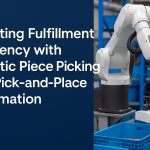
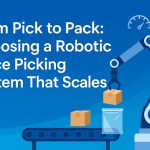
Rising order volumes and tighter SLAs are pushing teams to replace manual islands with a connected, item-level flow. At the center of that flow is a robotic piece picking system a workcell that turns piece picking into a predictable rhythm you can plan around. When paired with smart packaging gear, it shortens the path from tote to shipping label while reducing errors and rework.
How the modern cell works
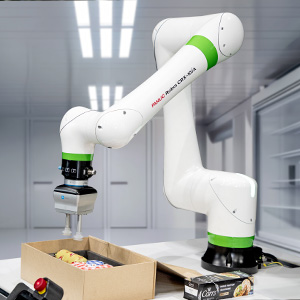
A vision-guided AI picking robot identifies each SKU, selects a stable grasp, and performs a precise transfer. In most deployments, the arm runs as a pick and place robot, handing the item to a chute, carton, or bagging throat. That steady hand-off is what lets robotic bagging do its best work open, insert, seal, print, verify unlocking true direct-to-bag fulfillment. The result: fewer touches, shorter cycle time, and consistent presentation at weigh/scan.
Why this beats stop-start operations
Good warehouse automation picking isn’t only about peak pph. The real win is sustained throughput across shifts and seasons. Vision confirmation lowers mispicks; standardized handoffs reduce carton damage and label failures. When volume spikes or labor is tight, a stable automated lane protects promise dates without expanding floor space.
Packaging choices that fit the job
Your SKUs and order profile should drive the packaging spec. For single-item orders, an autobagging machine or auto bagging system keeps pace with the picker and simplifies labeling. Need higher rates and minimal operator involvement? Consider a fully automatic bagging machine as the core of your automatic bagging system. If you insert instructions, samples, or accessories before sealing, an automatic bag placer machine streamlines the step. For fast cycles on standard bags, look for equipment optimized for automatic bag filling. When comparing vendors, validate how the auto bagging system behaves under your materials, labels, and volumes not just brochure speeds.
Handling real-world variation
Real floors are messy. Totes arrive in mixed orientations with shiny films, soft mailers, and clear clamshells. Modern automated piece picking tackles this “randomness” with depth sensing, grasp libraries, and confidence checks. A capable warehouse picking robot (or dedicated piece picking robot) keeps flow steady even in random picking conditions, which matters more than impressive demo clips.
Pilot checklist you can run this month
SKU coverage & accuracy: Test your hardest items; track first-pass pick and first-pass bag/label success over multi-hour runs.
Sustained rates: Measure average picks/bags per hour across a full shift; peaks are marketing, averages pay the bills.
Integration depth: Confirm clean handshakes with WMS/WES, scanners, scales, and the bagger so confirmations, weights, and labels post without manual touches.
Changeovers: Recipe swaps, film changes, and SKU adds should take minutes.
Uptime & service: MTBF/MTTR, spare-parts kits, and remote diagnostics determine real capacity.
Choosing platforms with data not hype
You’ll find comparison threads like piecepicking vs osaro when shortlisting. Use them as a prompt to run side-by-side trials with identical SKUs, lighting, presentation, and a neutral scorecard: coverage, sustained pph/bph, exception recovery, integration effort, and support quality. The “best” solution is the one your operators trust on a peak Monday afternoon.
Pair a robust robotic piece picking system with the right bagging setup whether that’s an autobagging machine, automatic bagging system, or fully automatic bagging machine and integrate tightly. The result is a dependable pick-to-pack engine that ships faster, cuts errors, and scales as your business grows.