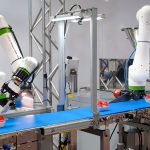
Labor is tight, order mixes keep changing, and customer patience is shrinking. That’s why more operators are shifting to a robotic piece picking system a focused slice of warehouse automation picking that converts mixed totes into labeled parcels with fewer touches and steadier cycle times.
How the modern lane works
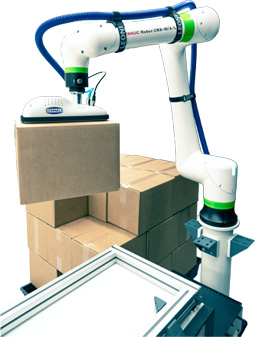
Everything starts with perception. Cameras and depth sensors perform automated piece picking by segmenting each item, estimating pose, and assigning confidence. Those signals drive a pick and place robot usually with hybrid grippers (suction + fingers) so the AI picking robot selects the lowest-risk grasp for glossy boxes, poly mailers, soft goods, and odd shapes. The goal isn’t flashy demos; it’s repeatable cycles that hold up under real SKU diversity and lighting.
Quality is enforced in-line. Barcode and weight checks confirm the right item at the right time. Exceptions route to QC without freezing the cell. That verification unlocks the speed play: robotic bagging and direct-to-bag fulfillment. Instead of detouring to pack benches, items flow straight into a bagger, get sealed, labeled, and head to sortation. The result: fewer touches, shorter walk paths, and a more stable ship window.
Pilot smart, scale clean
Start with a representative SKU subset that includes “hard” items, not just easy wins. Set two primary KPIs picks per hour (CPH) and first-pass success (FPS) then run weekly reviews of fail codes, lighting angles, and grasp priorities. Small inputs compound into big gains. Once the cell is stable, clone it. That’s where a modular warehouse picking robot outperforms ad-hoc automation repeatability, not one-off heroics.
Piecepicking vs OSARO: choose by outcomes, not headlines
Many search “piecepicking vs osaro” during vendor evaluation. Keep the discussion grounded in the outcomes you need:
-
Integrations: Depth and reliability of WMS/OMS and print flows.
-
Retraining cadence: How quickly new SKUs lift FPS.
-
Gripper flexibility: Swap time and performance on tricky surfaces.
-
Performance under mix: Does cycle time hold as diversity rises?
-
Exception handling: Smooth no-read routing without stalls.
Run proofs with your real SKUs, not curated demo kits. Let CPH, FPS, and exception rates make the decision for you.
Don’t fear random picking
Reality is messy: items shift, labels wrinkle, and bins aren’t presentation-perfect. Effective policies handle random picking using segmentation + pose + re-grasp strategies. You’re aiming for predictabilityn a tight cycle-time distribution more than perfection. When the lane remains steady through chaos, upstream and downstream teams learn to trust it.
Metrics that matter
Track the whole journey, not just the robot arm:
-
CPH and FPS at the cell
-
Exception rate and top fail codes
-
Touches per order and walk distance
-
Dwell from verify → label
-
Mis-ship rate and customer-visible defects
When these move together, the lane becomes self-funding: less rework, fewer escalations, and more orders out the door.
The takeaway
A well-tuned robotic piece picking system anchored by an AI picking robot, verified in-line, and finished with robotic bagging turns variability into throughput. Design for steady cycles, short feedback loops, and clonable cells. With direct-to-bag fulfillment and a dependable warehouse picking robot, your piece-picking lane will ship faster, with less stress, and keep improving as your catalog evolves.