Warehouses are under pressure to ship more orders with fewer touches and tighter SLAs. For many operations, the fastest path to consistent performance is a robotic piece picking system automation that handles single-item fulfillment with steady speed and high accuracy. When planned correctly, it becomes the backbone of warehouse automation picking, linking inventory to packaging and carrier induction with fewer bottlenecks.
How Modern Cells Work
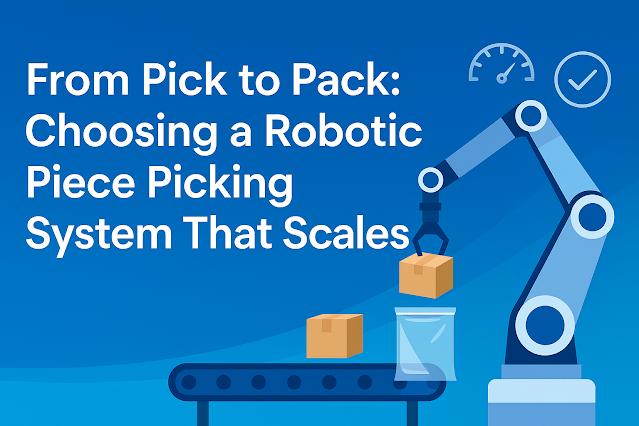
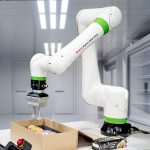
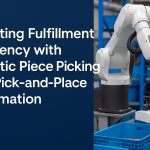
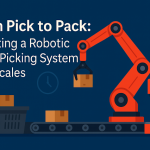
At the heart of today’s systems is an AI picking robot that uses cameras and software to recognize products, choose a stable grasp, and complete a clean transfer. In most deployments the arm acts as a pick and place robot, moving items from totes or bins to the next step chutes, cartons, or a bagging station. Pairing this cell with robotic bagging unlocks direct-to-bag fulfillment: the item drops into a polybag, which is sealed, labeled, and scanned within seconds. The result is a shorter path from order release to ship label, fewer manual handoffs, and more predictable throughput.
What to Validate Before You Buy
Successful automated piece picking programs are built on real data from your floor not brochure metrics. Validate these points during trials:
-
SKU coverage and accuracy: Test your actual mix rigid boxes, soft mailers, glossy wraps, and clear film. Track grasp success, regrips, and exception rates across multi-hour runs.
-
Sustained throughput: Peak picks per hour look good on slides; the average over a full shift pays the bills. Verify under your lighting, tote pitch, and presentation.
-
Integration: Confirm native handshakes with WMS/WES, scanners, scales, and your bagger. Clean data flow eliminates rework and delays.
-
Changeover and learning: New SKUs should require minimal setup. Systems that learn over time reduce engineering effort and improve stability.
-
Uptime and service: MTBF/MTTR, spare parts, and response times matter as much as the robot’s spec sheet.
Sorting Through Vendors
Buyers often search “piecepicking vs osaro” and similar comparisons when shortlisting solutions. Treat those queries as a prompt to run objective, side-by-side trials using the same SKUs, fixtures, and metrics. A uniform test removes brand bias and reveals which platform best fits your product mix, packaging, and targets.
Where the ROI Appears
Well-designed cells do more than raise picks per hour. They lower mispicks and reships, standardize presentation, and stabilize performance during staffing gaps or seasonal peaks. With direct-to-bag fulfillment, touchpoints shrink, labels print reliably, and outbound lanes stay balanced. Teams spend less time firefighting and more time on slotting, inventory quality, and continuous improvement.
Getting Started
Start narrow: a high-volume lane, your top movers, or single-line orders. Prove the metrics with a pilot, then scale horizontally. When an AI picking robot and pick and place motion are paired with robotic bagging, warehouse automation picking becomes a dependable pick-to-pack engine one that helps you ship faster, cut errors, and meet customer promises without adding floor space or headcount.