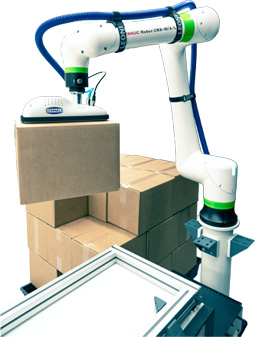
Manual Palletizing Is a 600-Lift-Per-Hour Job. That Adds Up.
One shift of manual palletizing means roughly 600 lifts. Every hour. For the full duration of someone’s workday.
The back and shoulder damage from that kind of repetitive load doesn’t show up immediately. It accumulates. Workers go home and feel it. They come back and feel it more. Eventually they don’t come back, or they file a claim.
This is the part of the labor conversation that doesn’t get enough attention. Operations leaders talk about turnover and absenteeism. But a lot of that turnover starts with physical wear that builds quietly over months before it becomes a workers’ comp case or a resignation.
Warehouse automation removes the highest-injury tasks from the floor. Workers stay in roles that don’t grind them down. Experienced people stay longer. Training costs drop.
CMES AI Robotics handles palletizing and depalletizing with the same AI vision platform that powers its piece picking robot systems. The system identifies product orientation, adjusts grip, and places precisely — without a human bearing the physical load.
The business case is measurable: fewer injuries, lower comp claims, higher retention. The human case is straightforward: people shouldn’t get hurt doing their job.
Learn more at piecepicking.com or reach out to info@piecepicking.com